

Introduction
Most athletes think about food before a session. What to eat for energy, how much caffeine to have, and whether to carb-load. Fewer think about what happens after. Yet your body does not get stronger during the workout. It gets stronger afterwards, while it repairs and adapts. That is where sports nutrition coaching UAE athletes choose can make a real difference. It treats food as part of recovery, not only fuel for performance. In this guide, we explain how, in plain words. This is general information, not medical advice.
Performance and Recovery Work Together
Training is the signal. Recovery is the response. If you train hard but recover poorly, you may feel flat, sore for days or stuck at the same level. Good recovery helps you:
- Repair muscle after hard sessions
- Refill energy stores for the next workout
- Stay healthy and avoid long breaks
- Sleep well and keep a steady mood
Food supports every one of these. That is why recovery nutrition deserves as much attention as pre-workout meals.
Step 1: Refuel With Carbs and Protein
After a hard session, your body needs two main things. Carbohydrates refill the energy you used. Protein gives the building blocks for muscle repair. A meal or snack that contains both, within a few hours of training, is a simple and effective habit.
Examples that work for many people:
- Rice, chicken and vegetables
- Greek yogurt with fruit and oats
- A tuna sandwich and a banana
- Eggs on toast with a glass of milk
Most guidelines also suggest spreading protein across the day, not eating it all at dinner. Do not worry if you miss the window by an hour. Your total food across the day matters most.
Step 2: Rehydrate, Especially in the Heat
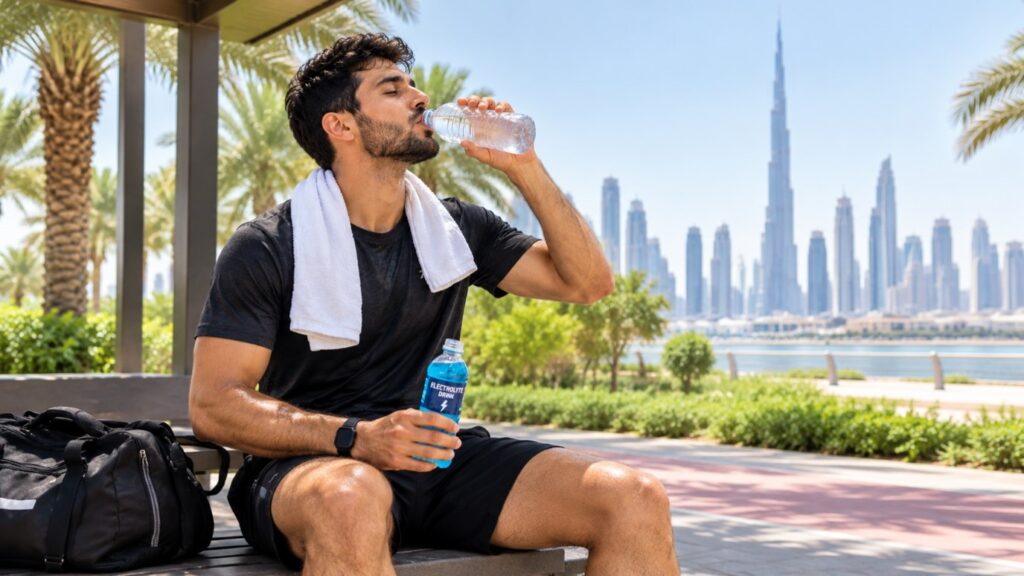
The UAE climate adds a challenge. In hot weather, you sweat more and lose both water and salts. If you do not replace them, you may feel tired and get headaches or cramps.
A simple check can help. Weigh yourself before and after a session. The difference shows how much fluid you lost. Then:
- Drink water steadily in the hours after training, as plain water is fine for short, easy sessions
- Add salt through food or an electrolyte drink after long, sweaty sessions
- Check that your urine is a pale color
- Take extra care in summer and outdoors
If you feel dizzy or confused or stop sweating in the heat, stop and seek medical help straight away.
Step 3: Protect Your Sleep
Sleep is when much of your repair happens. Food can help or hurt it. Heavy meals late may disturb sleep for some people. Caffeine in the afternoon can linger into the night. A small snack with carbs and protein before bed can help if you train late. A good nutrition coach can help you time meals around late sessions.
During Ramadan, the same ideas apply. Plan your meals around training, and place your main recovery meal after iftar.
Step 4: Match Food to Your Training Week
Your food needs are not the same every day. A hard session needs more fuel than a rest day. A good coach looks at your full week and adjusts. For example:
- Heavy training days: more carbohydrate and a protein-rich recovery meal
- Easy days: lighter portions, with steady protein
- Rest days: enough food to support repair, not zero
This keeps energy steady and avoids the habit of “eating less to make up for a big session.”
Here is a simple example. A runner has intervals on Tuesday and an easy jog on Thursday. Tuesday needs a bigger carb meal before and a recovery meal after. Thursday needs less. Matching food to the day helps the runner feel better on both.
Signs You Are Not Recovering Well
Watch for these warning signs:
- Soreness that lasts many days
- Poor sleep or constant tiredness
- Getting ill often
- A drop in strength or mood
- Losing weight without trying
Under-eating while training hard can slow recovery and raise the risk of injury. If you notice these signs, talk to your doctor and review your food plan. Small signs matter early.
Why the Evidence Matters
The sports world is full of strong claims. New powders, detoxes and “secret” recovery foods appear every month. Most lack proof. Look for evidence-based training UAE programs that rely on well-tested methods and explain the reason behind each step. Good advice is usually simple, repeatable and based on your own results. If a claim sounds too good, ask for the research behind it.
What to Expect From Coaching
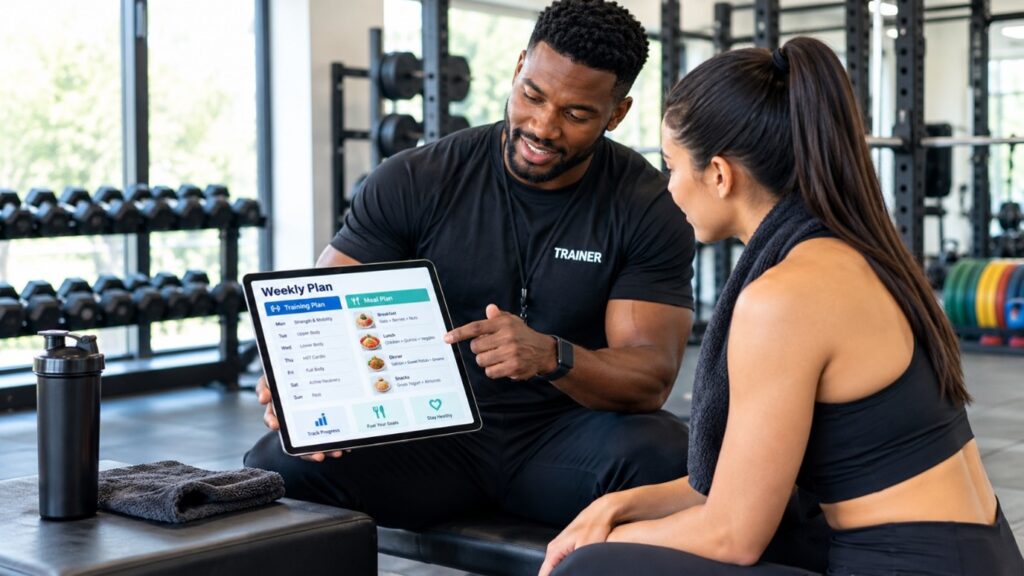
A good coach will usually:
- Ask about your sport, schedule, goals and health history
- Review your current eating, sleep and training
- Build a plan that fits your week and your culture, including Ramadan
- Check in often and adjust as you progress
- Send you to your doctor when something looks unusual
Conclusion: Recovery Is Part of the Plan
Performance gets the attention, but recovery builds the results. When you refuel, rehydrate and rest properly, you train harder, stay healthier and keep improving.
At Lamann360, we offer one-to-one coaching in training and nutrition for athletes and busy people across the UAE. Book a free consultation to talk through your goals.
FAQs
What should I eat after training?
Choose a mix of carbohydrates and protein, such as rice with chicken or yogurt with fruit. Eat within a few hours of training and drink fluids too.
How much water should I drink in the UAE heat?
It varies by person and session. Weigh yourself before and after training to see your fluid loss, and replace it steadily afterwards.
Can I train during Ramadan?
Many people do. Plan your meals and training time carefully, and place your main recovery meal after iftar. Ask your doctor if you have a health condition.
Do I need supplements to recover well?
Most people do well with real food first. A supplement may help in some cases, but ask a qualified professional before you start.